

Review the records. Not your sanity.
Done the old way, a Review of Session Records report lands when the errors are already two years old. Orderly Meetings turns the cycle from months into days.
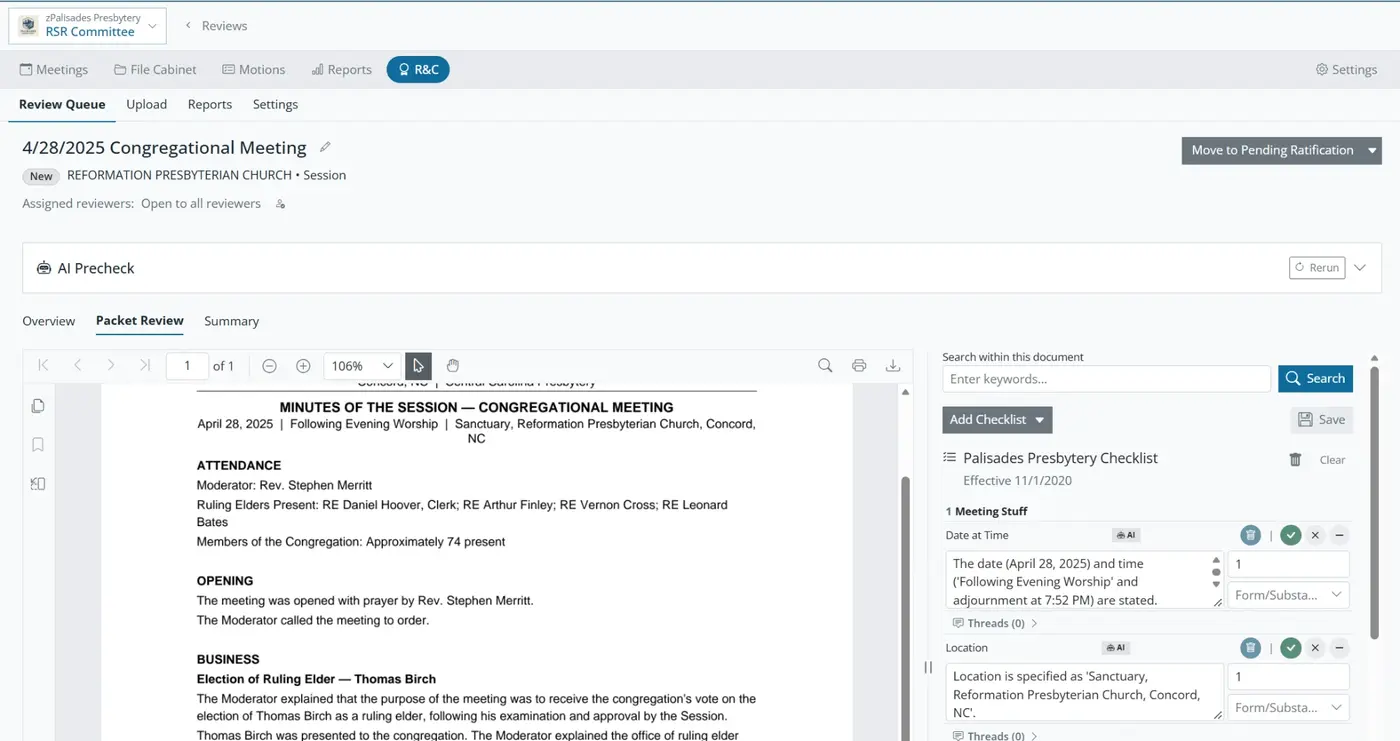
From submission to approved findings — in days, not months.
Publish your checklist once; sessions submit their records inside Orderly Meetings. An AI pre-check reads each packet, extracts the meeting data, and flags findings against the right checklist. Your committee reviews a working draft — findings beside the page they came from — instead of a stack of paper.
Your committee reviews; AI does the grunt work
Reviewers accept, edit, or overrule every finding. The machine drafts; people decide.
Your clerks don’t change a thing, to start
Sessions can submit as they always have; the value grows as they come online.
Findings delivered automatically
No binders, no mail-merge — the Review of Session Records report assembles itself.
One connected book upstream
When session and presbytery both use it, submission and findings are a click, not a chase.
What changes when you use Orderly Meetings
- A 30-church presbytery takes a cycle from roughly 215 volunteer hours to about 21.
- Findings come back while the clerk still remembers the meeting — not 26 months later.
- Accountability the courts were designed for, on a timeline that actually delivers it.